
6 Best Types of Magnesium: The Proven Guide to Superior Absorption
Understanding the different 6 types of magnesium is essential because this mineral acts as a cofactor in over 300 biochemical reactions in the human body. It is vital for everything from energy production to heart health. However, not all magnesium is created equal. To make an informed decision, you need to understand the science behind bioavailability and how to interpret supplement labels effectively.
However, once you decide to supplement, a new challenge arises: the market is flooded with different forms of magnesium, from citrate and glycinate to oxide and malate. Each type has unique properties, absorption rates, and target benefits. To make an informed decision, you need to understand the science behind bioavailability and how to interpret supplement labels effectively.
Understanding the Bioavailability Matrix: Why Form Matters
When you take a magnesium supplement, your body doesn’t absorb 100% of the mineral. The percentage that actually enters your bloodstream and becomes available for use is known as bioavailability. This is largely determined by the specific compound the magnesium is bound to. Forms that dissolve well in liquid generally exhibit higher absorption rates than less soluble forms. Here are the primary types of magnesium and their specific roles based on clinical data.
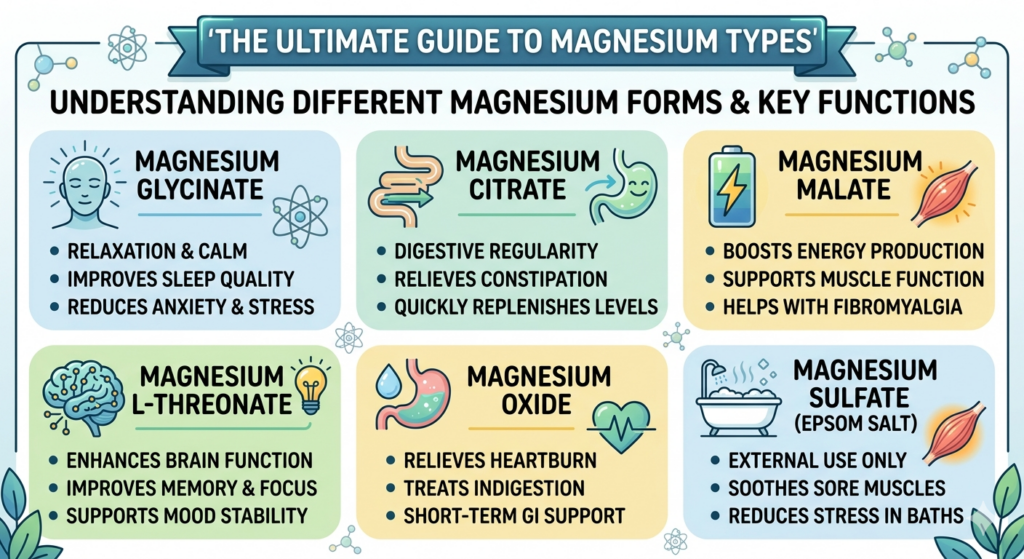
Magnesium Glycinate: For Relaxation and Sleep Bound to the amino acid glycine, this chelated form is highly bioavailable because it uses amino acid pathways for absorption. It is the gold standard for calming the nervous system, reducing anxiety, and improving sleep quality. Most importantly, its side-effect rate for diarrhea is significantly lower than inorganic salts.
Magnesium Malate: For Energy and Muscle Function Malate is a key component of the Krebs cycle, the body’s energy-producing pathway. This makes it the ideal choice for those suffering from chronic fatigue or fibromyalgia. It helps boost energy production and supports muscle recovery after physical exertion.
Magnesium L-Threonate: For Brain Health and Memory This is the only form of magnesium scientifically proven to effectively cross the Blood-Brain Barrier. If your goal is to enhance memory, improve focus, or manage mood stability and cognitive decline, this specialized form is the most effective.
Magnesium Citrate: For Digestion and Constipation Bound with citric acid, this form is highly water-soluble. It works by pulling water into the intestines, making it a reliable tool for supporting digestive regularity and relieving occasional constipation.
Magnesium Oxide: For Heartburn and Indigestion While it has a high elemental magnesium content, its absorption rate is extremely low (around 4%). It is best utilized as an antacid for short-term relief of heartburn or acid reflux rather than for systemic magnesium replenishment.
Magnesium Sulfate (Epsom Salt): For External Soothing Best known as a bath soak, this form is excellent for external use. It helps soothe sore muscles, reduce inflammation, and lower overall stress levels through transdermal absorption in a warm bath.
1. Decoding the Label: Elemental Magnesium vs Compound Weight
A major “trap” for consumers is the difference between total compound weight and actual elemental magnesium.
-
The Oxide Reality: A 400mg tablet of Magnesium Oxide contains roughly 240mg of elemental magnesium (60%). However, because the absorption is so poor, some studies suggest that magnesium bioavailability from oxide forms can be as low as 4 percent, meaning most of the mineral remains in the gut. You may only receive 10mg of usable mineral, while the rest causes digestive distress.
-
The Glycinate Reality: Magnesium Glycinate contains only about 10% to 14% elemental magnesium. A 400mg capsule might only provide 50mg of actual magnesium, but because the absorption rate is near 80% to 90%, your body ends up with more usable mineral and zero stomach upset.
2. Synergists and Antagonists: The Magnesium “Friend Group”
To maximize your results, you must consider how magnesium interacts with other nutrients.
Vitamin B6: Acts as a chaperone, actively moving magnesium into the cells where it is needed most. Without B6, much of the magnesium remains in the extracellular fluid.
Vitamin D3 and K2: Magnesium is the “on switch” for Vitamin D. Without sufficient magnesium, Vitamin D remains stored and inactive. Furthermore, magnesium ensures that the calcium absorbed via Vitamin D is directed by Vitamin K2 into the bones instead of the arteries.
The Competitors: Be cautious with high-dose Zinc (over 142mg/day) or high-dose Calcium supplements. These minerals compete for the same absorption pathways and can significantly inhibit your magnesium uptake.
3. Clinical Evidence: Why Science Backs Supplementation
For Sleep and Stress: Clinical studies show that supplementing with bioavailable magnesium reduces serum cortisol, the body’s primary stress hormone, and can shorten the time it takes to fall asleep by 15 to 20 minutes.
For Migraines: The American Academy of Neurology suggests that a daily dose of 600mg of high absorption magnesium is a probably effective strategy for preventing migraine frequency.
For Exercise: Magnesium helps break down lactic acid in the muscles, significantly reducing post workout soreness and improving recovery time for athletes.
How to Choose the Right Supplement
Choosing the right magnesium depends on your primary health goal.
-
For mental calm: Choose Magnesium Glycinate.
-
For digestive regularity: Choose Magnesium Citrate.
-
For physical energy: Choose Magnesium Malate.
-
For brain power: Choose Magnesium L-Threonate.
Safety First
Most people can safely take magnesium, as the body excretes excess amounts through urine. However, excessive doses can cause diarrhea or nausea. If you have kidney disease or are taking other medications, always consult with a healthcare professional before starting a new supplement.
References:
Bioavailability study on Magnesium Oxide vs. Organic Salts (Mito Health & PMC).
Clinical guidelines for Migraine Prevention (American Academy of Neurology).
Research on Magnesium L-Threonate and the Blood-Brain Barrier (Wise Owl Health).
Nutrient synergy studies regarding Vitamin D3, K2, and B6 (MDPI Nutrients).