

FREE Shipping with a minimum spend of RM100.
500 Points Upon sign up (100 Points = RM1)

Is a Higher CFU Count Better? 3 Scientifically Proven Truths About Probiotic Absorption (And Why Your Supplement Might Be Failing Your Gut)

Probiotic

When you shop for a gut health supplement in Malaysia—whether you are dealing with constant bloating after a spicy meal or irregular digestion—what is the first thing your eyes look for on the label? For most people, it’s that staggering number followed by three letters: CFU (Colony Forming Units). Whether it is 10 billion, 50 billion, or even 100 billion, we are conditioned to believe that the bigger the number, the better the results. 

Does a high CFU probiotic guarantee better gut absorption? No. Science proves that high CFU numbers are meaningless if the live bacteria cannot survive your harsh stomach acid. Bioavailability, advanced acid-resistant capsule technology, and prebiotic synergy matter far more than quantity. 

Truth #1: Your Stomach Is a Probiotic Graveyard (The Survival Challenge)

To understand why a huge CFU count doesn’t guarantee results, we need to look at the hazardous journey a probiotic capsule takes through your digestive tract. Probiotics are live, delicate bacteria—and from the moment you swallow them, they enter a highly hostile environment.

The Stomach Acid Problem

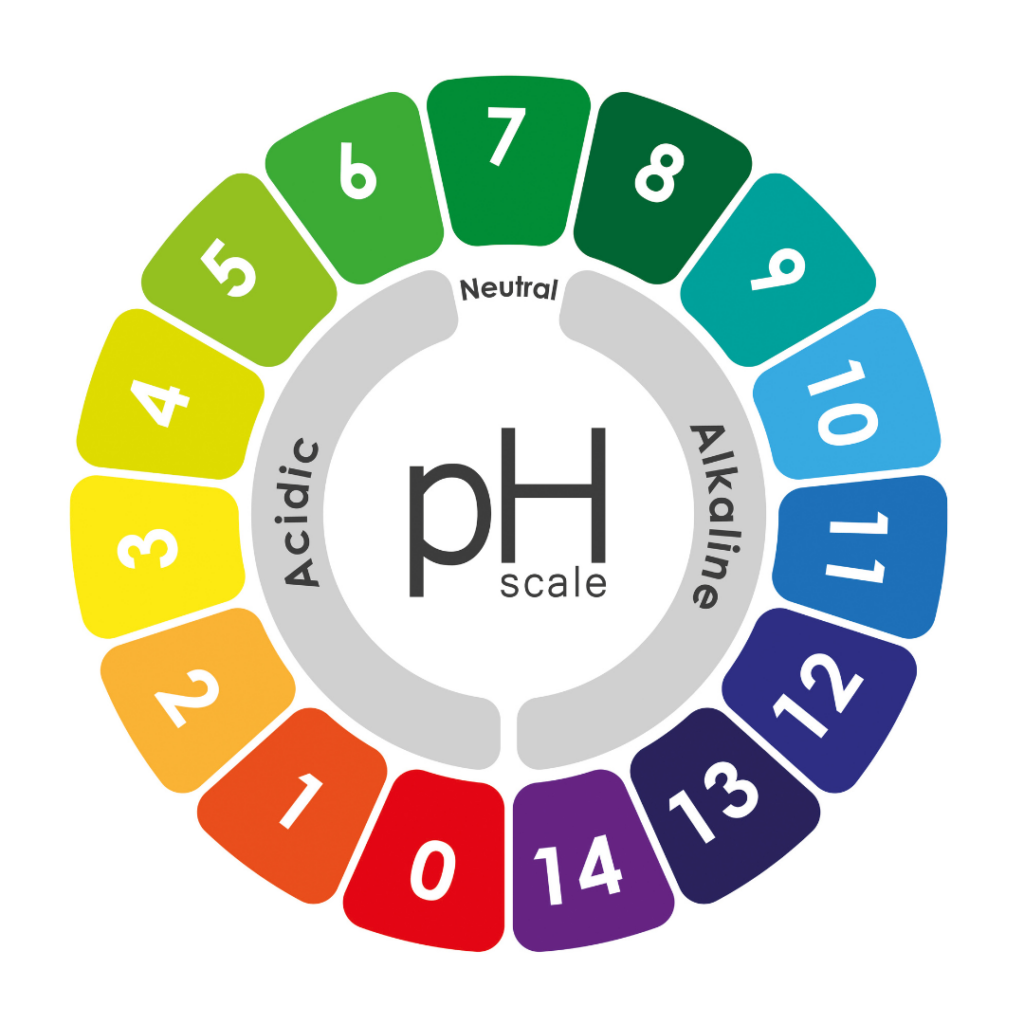
Your stomach is designed to destroy foreign invaders with an extremely low, highly acidic pH (typically between 1.5 to 3.5). Unfortunately, your digestive juices cannot distinguish between harmful bacteria and premium probiotics.

  • The Flaw of Standard Capsules: If your supplement uses standard, unprotected gelatin capsules, the shell dissolves within minutes of hitting your stomach.
  • The Result: This premature rupture exposes the live bacteria to a bath of gastric acid—and a significant portion of those cultures may not survive long enough to benefit your lower gut.


PH
🔬 Science Says : A study using a dynamic gastrointestinal model (TIM-1) found that unprotected probiotic powder had a survival rate of just 5.3% for bifidobacteria and 1% for Lactobacillus after passing through the gastric compartment. — PMC, Probiotic survival during multi-layered tablet development
Date Manufacture

Truth #2: Beware of the “Time of Manufacture” Trap

Another common oversight for e-commerce shoppers is the “time of manufacture” guarantee. If a brand promises 50 billion CFU at the time of manufacture, that count naturally degrades during weeks or months on a store shelf or in warehouse storage.

By the time that bottle reaches your kitchen counter, the live, functional count could be a fraction of what was originally promised. When choosing a probiotic, always look for products that guarantee the CFU count at the time of expiry, not just at manufacture.

Truth #3: Not All Capsules Or Formulas Are Equal

Two products can carry the exact same CFU count on the label but deliver vastly different results depending on how they are scientifically engineered.

1. Specific Strain Identification (The Alphanumeric ID)

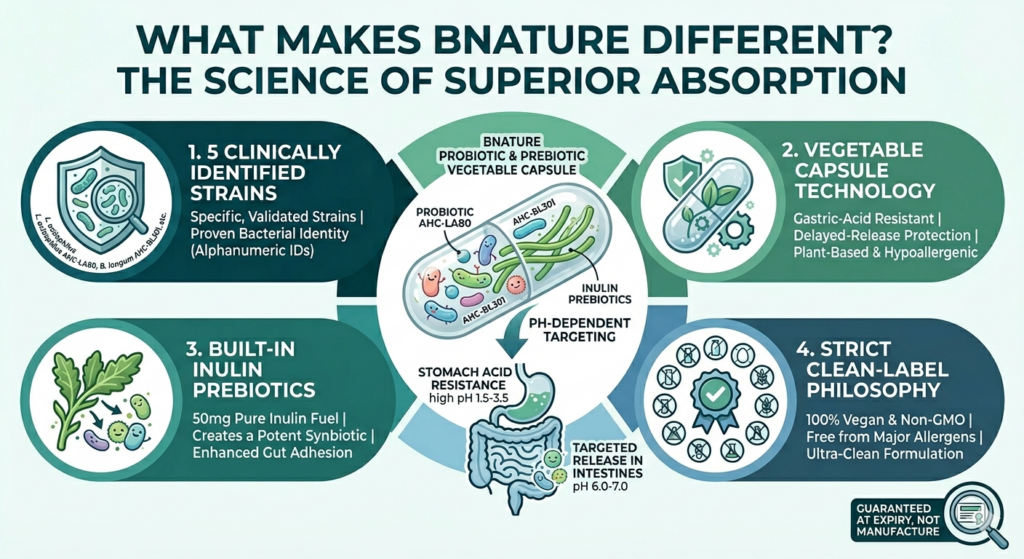
Not all bacteria are created equal. A high-quality supplement will never just list a generic name like “Lactobacillus acidophilus”. It will specify the exact, clinically studied strain code. The strain code is proof of clinical testing; without it, you are buying an unverified ingredient. Always look for formulas that explicitly list targeted strains with their alphanumeric identifiers (e.g., AHC-LA80).

2. Advanced Encapsulation Technology (The Shield)

Premium probiotics rely on gastric-acid-resistant, delayed-release capsule designs built on pH-dependent targeting:

  • In the Stomach (pH 1.5–3.5): The capsule remains completely intact, protecting dormant bacteria from harsh gastric juices.
  • In the Intestines (pH 6.0–7.0): The capsule dissolves smoothly in the duodenum (small intestine), releasing active strains exactly where they are needed.

🔬 Science Says : A 2013 study on commercial probiotic products found that all four enteric-coated capsule products demonstrated significantly higher survival rates through gastrointestinal transit. Of 13 non-enteric-coated products tested, eight showed limited resistance and five showed no survival at all. —Gastrointestinal survival of bacteria in commercial probiotic products(2013) .

3. Prebiotics (The Built-In Fuel Source for Synbiotics)

Probiotics are living organisms that need nourishment to thrive. Prebiotics act as the “lunchbox” or fuel for your probiotics. When you combine live bacteria with specialized plant fibers (like Inulin), it becomes a Synbiotic.

The prebiotics provide the fuel your good bacteria need to multiply and outcompete harmful microbes the moment they arrive in your gut. 

🔬 Science Says: Research shows that inulin enhances the adhesion of Lactobacillus strains to intestinal mucus, improving their persistence in the gut. A meta-analysis also confirmed that synbiotic formulations were more effective than probiotics alone in reducing the duration of acute diarrhea, partly due to improved probiotic survival during gastrointestinal transit. — Nutrients 2026, Prebiotics and Gut Health: Mechanisms, Clinical Evidence

A randomized, double-blind, placebo-controlled clinical study also found that a synbiotic formulation combining Lactobacillus, Bifidobacterium strains and inulin-type fructans significantly increased gut microbiota diversity and improved immune markers compared to placebo over 28 days. — PMC, Effects of Inulin-Based Prebiotics with Probiotics on Gut Microbiota (2022)

Studies

The Golden Rule: Bioavailability Beats Quantity

Taking an unprotected 100-billion CFU supplement is far less effective than taking a scientifically shielded supplement with a high intestinal survival rate. High bioavailability, clinically verified strains, and prebiotic synergy are what truly transform your digestive wellness.

Modern Gut Health Simplified with Bnature

At GoWellness, we built Bnature Prebiotic & Probiotics Vegetable Capsules specifically to address these absorption gaps focusing entirely on targeted bioavailability and ultra-clean ingredients, rather than chasing inflated CFU numbers.

FAQ: Frequently Asked Questions About Probiotics in Malaysia


1. Do I need to keep Bnature Probiotics in the fridge (refrigerator)?

While many high-CFU probiotics require refrigeration because they degrade quickly at room temperature, Bnature utilizes advanced vegetable capsule technology and stable, clinically studied strains. However, due to Malaysia’s humid and hot climate, we highly recommend storing the bottle in a cool, dry place away from direct sunlight to guarantee potency until expiry.

2. Is Bnature Probiotics suitable for vegetarians or a Halal diet?

Yes, absolutely. Unlike traditional supplements that use animal-derived gelatin capsules (which may contain allergens or porcine/bovine by-products), Bnature uses 100% plant-based vegetable capsules. It is completely free from animal by-products, making it highly clean, hypoallergenic, and friendly for both vegetarians and Muslim consumers in Malaysia.

3. When is the best time to take Bnature Prebiotic & Probiotics?

Thanks to our advanced pH-dependent, delayed-release capsule technology, the live bacteria are fully shielded from harsh stomach acid. This means you can take it either before or after meals without worrying about the bacteria destroying in your gastric juice. For best consistency, we recommend taking it at the same time every morning.

References

  • Probiotic survival during multi-layered tablet development. PMC8472304
  • Gastrointestinal survival of bacteria in commercial probiotic products. PubMed 23551750
  • Prebiotics and Gut Health: Mechanisms, Clinical Evidence. Nutrients MDPI
  • Effects of Inulin-Based Prebiotics with Probiotics on Gut Microbiota. PMC9318854
1
    1
    Your Cart
    Fibre Max
    Vitpro Fibre Max 10g X 10's
    1 X RM29.90 = RM29.90
    Scroll to Top

    Hot Deals Product